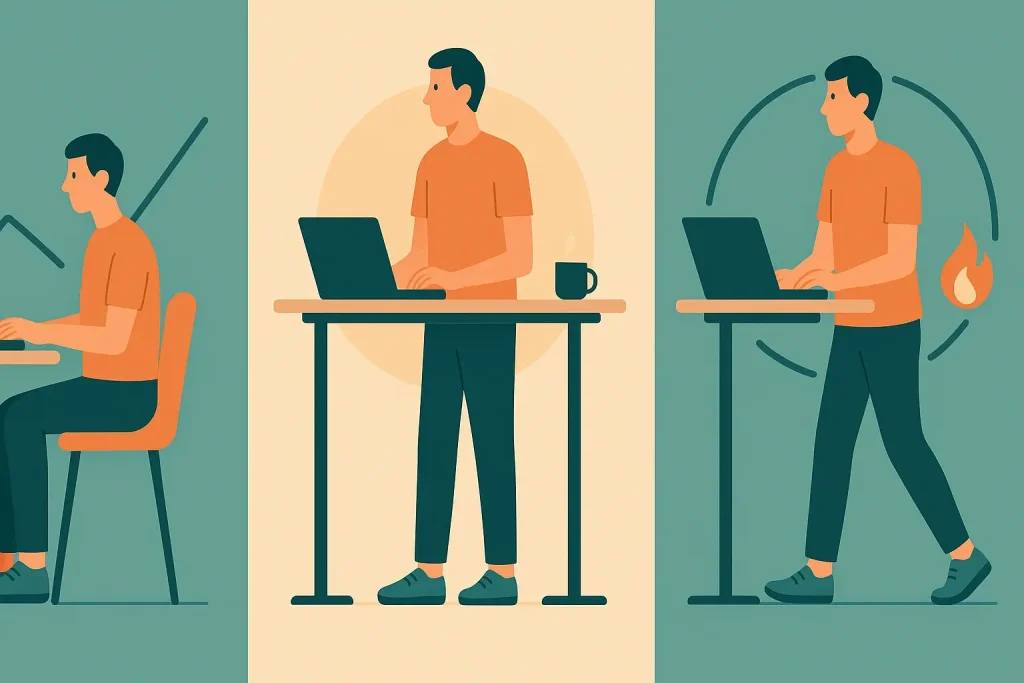
Standing desks have taken offices by storm. You’ve probably seen them everywhere, from corporate headquarters to home offices. But do they actually help you burn more calories?
The short answer is yes. But there’s more to the story.
Standing instead of sitting does increase your calorie expenditure. However, the difference might not be as dramatic as you’d hoped. Before you invest hundreds of dollars in a standing desk expecting rapid weight loss, you need to understand what the research actually shows.
The Calorie-Burning Reality of Standing Desks
When you stand, your body works harder than when you’re sitting. Your muscles engage to keep you upright. Your heart pumps a bit faster. Your metabolism kicks up slightly.
Standing burns approximately 0.15 more calories per minute than sitting. That translates to about 9 calories per hour.
Let’s put that into perspective. If you stand for four hours during your workday, you’ll burn an extra 36 calories. Stand for the entire eight-hour shift? You’re looking at roughly 72 additional calories burned.
That’s less than a small apple.
Does this mean standing desks are pointless? Not at all. The calorie burn is just one piece of a much larger puzzle.
Why the Calorie Difference Isn’t Huge
Your body is incredibly efficient. Standing requires minimal additional effort compared to sitting because you’re not engaging in vigorous movement. You’re simply maintaining an upright position.
Think about it this way:
- Walking burns about 150-200 calories per hour
- Running burns 400-600 calories per hour
- Sitting burns roughly 60-80 calories per hour
- Standing burns about 70-90 calories per hour
The metabolic difference between sitting and standing is modest. You’re not engaging large muscle groups in sustained activity. Your cardiovascular system doesn’t shift into a higher gear. The energy expenditure increase is real but relatively small.
What the Research Actually Says
Multiple studies have examined the calorie-burning effects of standing desks. The findings are consistent: standing does increase energy expenditure, but modestly.
One widely cited study found that standing burned 0.15 calories per minute more than sitting. Over a full year of standing three hours per day, that adds up to about 30,000 extra calories, or roughly 8 pounds of fat.
That sounds impressive, right?
Here’s the catch. This calculation assumes everything else stays exactly the same. Your diet doesn’t change. Your exercise habits remain constant. You don’t unconsciously compensate by eating a bit more or moving less outside work.
In reality, weight loss is rarely that straightforward.
Another study tracking office workers who used standing desks found minimal weight loss over extended periods. Why? Because calorie burning is only one factor in weight management. The body adapts, hunger signals fluctuate, and lifestyle variables complicate the equation.
Beyond Calories: The Real Benefits of Standing Desks
Focusing solely on calorie burn misses the bigger picture. Standing desks offer several health advantages that have nothing to do with your waistline.
Reduced Back and Neck Pain
Many people experience significant relief from chronic pain after switching to a standing desk. Sitting for prolonged periods strains your spine and neck. Standing allows for better posture and natural spinal alignment.
Your back will thank you.
Improved Blood Sugar Control
Standing after meals helps regulate blood sugar levels. Research shows that alternating between sitting and standing throughout the day can reduce blood sugar spikes by up to 43% compared to sitting all day.
This is particularly important if you’re concerned about diabetes risk or metabolic health.
Lower Risk of Heart Disease
Prolonged sitting is linked to increased cardiovascular disease risk. One study found that standing for at least six hours per day could reduce heart disease risk factors. Your circulation improves when you stand. Blood doesn’t pool in your legs as readily.
Increased Energy and Productivity
Many standing desk users report feeling more alert and focused. You’re less likely to experience that mid-afternoon slump. Your brain gets better blood flow. Your energy levels remain more consistent throughout the day.
Does standing make you more productive? The research is mixed, but anecdotal evidence is strong.
Reduced Risk of Early Death
This sounds dramatic, but the data supports it. Excessive sitting is associated with higher mortality rates from all causes. Breaking up sitting time with standing periods appears to reduce this risk.
How to Maximize Calorie Burn with a Standing Desk
If you’re determined to boost calorie expenditure with your standing desk, you can take several steps to enhance the effect.
Don’t just stand still. Static standing isn’t much better than sitting. Move around. Shift your weight from foot to foot. Take a few steps back and forth. These small movements increase muscle engagement and calorie burn.
Use an anti-fatigue mat. These mats encourage subtle balance adjustments that activate your leg and core muscles. The micro-movements add up over hours.
Incorporate desk exercises. Try calf raises, gentle stretches, or even desk push-ups during breaks. These activities significantly increase your calorie expenditure beyond simple standing.
Alternate between sitting and standing. The magic isn’t in standing all day. It’s in breaking up prolonged sitting with standing intervals. Try standing for 30-45 minutes, then sitting for 15-30 minutes. This pattern keeps your muscles engaged without causing fatigue.
Walk during phone calls. Whenever possible, pace around your workspace during calls or meetings. Walking burns dramatically more calories than standing.
Maintain good posture. Poor standing posture can actually burn fewer calories and cause muscle fatigue. Stand tall with shoulders back and core engaged. This activates more muscle groups.
Setting Realistic Expectations
Standing desks aren’t a weight loss solution. They’re a health tool.
If you’re 50 pounds overweight, a standing desk alone won’t get you to your goal weight. You’ll need dietary changes, regular exercise, and overall lifestyle modifications. The standing desk can be part of a comprehensive approach to better health.
But it’s not magic.
Think of standing desks as one strategy among many for improving your metabolic health. They reduce sedentary time, which is valuable in itself. The modest calorie burn is a bonus, not the main event.
Who Should Consider a Standing Desk?
Standing desks aren’t for everyone. Consider your individual circumstances.
Good candidates include:
- People with desk jobs who sit 6-8+ hours daily
- Those experiencing chronic back or neck pain from sitting
- Individuals concerned about metabolic health or blood sugar control
- Anyone looking to reduce overall sedentary time
- People who feel sluggish or unfocused during long sitting periods
Exercise caution if you:
- Have existing knee, hip, or foot problems
- Experience varicose veins or circulation issues in your legs
- Have balance problems or dizziness
- Are pregnant (prolonged standing can be challenging)
Standing all day can cause its own problems. Leg fatigue, varicose veins, and joint stress are real concerns. Balance is crucial.
Common Mistakes to Avoid
Many people sabotage their standing desk experience through avoidable errors.
Wearing the wrong shoes. High heels or flat shoes without support will make standing painful. Invest in comfortable, supportive footwear. Your feet bear your entire body weight.
Standing in one position. Static standing is almost as problematic as sitting. Keep moving, even subtly.
Going all-in too quickly. Don’t suddenly stand for eight hours straight on day one. Gradually build up your standing tolerance. Start with 30-minute intervals and increase slowly over weeks.
Ignoring pain signals. Some initial muscle fatigue is normal. Sharp pain or persistent discomfort is not. Listen to your body.
Forgetting about ergonomics. Your screen should be at eye level. Your keyboard and mouse should be positioned so your elbows form 90-degree angles. Poor ergonomics will cause problems whether you’re sitting or standing.
The Bottom Line on Standing Desks and Calories
Do standing desks help burn calories? Yes, but the effect is modest.
You’ll burn an extra 9 calories per hour compared to sitting. Over time, this can add up, but it won’t replace proper diet and exercise. The real value of standing desks lies in reducing sedentary time, improving posture, and supporting overall metabolic health.
If you’re considering a standing desk purely for weight loss, adjust your expectations. If you’re looking for a tool to support a healthier lifestyle while reducing the negative effects of prolonged sitting, a standing desk could be an excellent investment.
The key is integration. Use your standing desk as part of a comprehensive approach to health that includes regular movement breaks, proper nutrition, intentional exercise, and good sleep habits. Standing isn’t a substitute for these fundamentals.
It’s a complement to them.
Your body was designed to move. Neither sitting nor standing all day is ideal. The best approach alternates between positions, incorporates regular movement, and keeps you engaged throughout your workday.
A standing desk won’t transform your body overnight. But it might just transform how you feel during those long work hours. And sometimes, that’s exactly what you need.
If you’re ready to explore your options, you can browse a variety of standing desk models and styles to find the one that best fits your workspace and budget. The right desk can make all the difference in creating a healthier, more dynamic work environment.