You’ve seen them in every pet store. Those carpeted towers with dangling toys and cozy hideaways. But do cat trees actually make cats happy, or are they just expensive furniture for your living room?
The short answer? Yes, cat trees can significantly boost your cat’s happiness and wellbeing. But the reasons why go far deeper than you might think.
Why Cats Need Vertical Space
Cats are natural climbers. Always have been.
In the wild, felines seek elevated positions for multiple reasons. Height offers safety from predators, provides a vantage point for spotting prey, and establishes territory. Your domestic cat carries these same instincts, even though the most dangerous “predator” in your home is probably the vacuum cleaner.
When cats can’t express these natural behaviors, stress builds up. They might scratch your furniture, knock things off counters, or develop anxiety-related behaviors. A cat tree gives them an outlet for these deeply ingrained needs.
The Psychology of Happy Cats
What makes a cat truly content?
Behavioral experts identify several key factors:
- Environmental enrichment – Mental and physical stimulation
- Territory control – Feeling secure in their space
- Predatory play – Outlets for hunting instincts
- Safe retreat options – Places to hide and decompress
- Vertical territory – Access to multiple levels
Cat trees check nearly every box on this list.
How Cat Trees Reduce Stress
Stress in cats manifests differently than in humans. Your cat won’t tell you they’re feeling overwhelmed. Instead, they’ll hide under the bed for hours, over-groom, or become aggressive toward other pets.
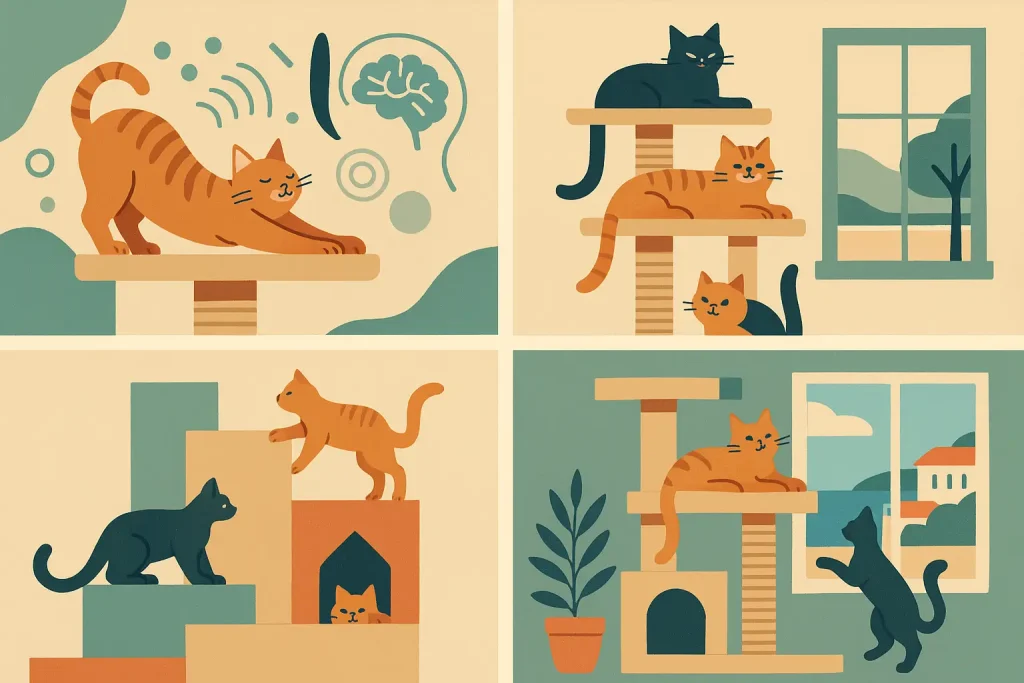
Elevated perches offer psychological benefits that ground-level spaces simply can’t provide. When a cat sits high up, they feel in control of their environment. They can survey the room, watch for potential threats, and choose when to interact with humans or other animals.
This sense of control matters. A lot.
Studies on feline behavior show that cats with access to vertical spaces display fewer stress-related behaviors. They’re more relaxed, more playful, and more socially engaged with their human companions.
The Multi-Cat Household Factor
Got more than one cat? You definitely need vertical space.
Cats are territorial creatures, but they don’t divide territory the way we do. Instead of claiming separate rooms, cats often share horizontal space while establishing hierarchy through vertical territory. The cat who can claim the highest perch often becomes the dominant cat.
Without adequate vertical space, cats compete for limited territory. This leads to:
- Fighting and aggression
- Urine marking
- Resource guarding
- Chronic stress for submissive cats
A well-designed cat tree with multiple levels allows cats to coexist peacefully. The confident cat takes the top platform. The more timid cat finds security on a middle level. Everyone wins.
Physical Health Benefits
Cat trees aren’t just good for mental health. They’re exercise equipment.
Modern indoor cats face an obesity epidemic. Without outdoor exploration and hunting, many cats become sedentary. They sleep 16 hours a day, wake up to eat, then return to napping. This lifestyle leads to weight gain, diabetes, and joint problems.
Climbing engages multiple muscle groups. When your cat scales a cat tree, they’re:
- Stretching their spine
- Working their leg muscles
- Improving balance and coordination
- Burning calories
- Maintaining joint flexibility
The vertical exercise provided by cat trees is particularly valuable for aging cats. Regular climbing helps maintain muscle mass and joint health, potentially extending your cat’s active years.
Scratching Needs Met
Why do cats scratch? It’s not to annoy you (though it might feel that way when they target your leather sofa).
Scratching serves multiple purposes. Cats mark territory through scent glands in their paws. They maintain claw health by removing dead outer layers. And they stretch their muscles in ways that feel incredibly satisfying.
Most cat trees come covered in sisal rope or carpet, perfect for scratching. When you provide an appropriate scratching surface at the right height and angle, cats typically leave your furniture alone. They’re not being destructive. They’re just doing cat things.
The Hunting Simulation Factor
Cats are ambush predators.
Even your lazy tabby who’s never caught anything more challenging than a dust bunny has the instincts of a skilled hunter. These instincts need expression, or behavioral problems emerge.
Cat trees with multiple levels mimic the varied terrain cats would navigate while stalking prey. Platforms at different heights encourage jumping, climbing, and pouncing. Add some dangling toys, and you’ve created a hunting simulation that keeps those predatory instincts satisfied.
Do All Cats Like Cat Trees?
Here’s the truth: not every cat will immediately love every cat tree.
Age, personality, and past experiences all play a role. Kittens typically take to cat trees instantly, treating them like jungle gyms. Adult cats might need time to warm up to the idea, especially if they’ve never had vertical space before. Senior cats with arthritis might struggle with high platforms unless you provide ramps or steps.
Some cats prefer:
- Open platforms over enclosed spaces
- Higher perches over lower ones
- Scratching posts with horizontal surfaces
- Trees near windows for bird watching
The key is understanding your specific cat’s preferences.
Location Matters
You can buy the most expensive, elaborate cat tree on the market, but if you put it in a basement corner, your cat probably won’t use it.
Cats want to be where the action is. They’re social creatures who want to observe household activities while maintaining the option to retreat. The best locations for cat trees include:
- Living rooms with regular family activity
- Near windows with interesting views
- Areas with good sightlines to multiple rooms
- Spaces away from loud appliances
Avoid placing cat trees directly next to litter boxes or feeding stations. Cats prefer some separation between their different activity zones.
Size and Stability Requirements
A wobbly cat tree is worse than no cat tree at all.
Cats need to feel secure when climbing. If a structure shakes or tilts, they’ll avoid it. This is particularly important for larger cats, who need sturdy construction with a wide, heavy base.
The minimum height depends on your cat’s size and jumping ability, but most cats appreciate platforms at least 4-5 feet off the ground. Taller trees offer more benefits, provided they’re stable enough to support your cat’s weight during energetic play.
Signs Your Cat is Happy With Their Tree
How do you know if your investment is paying off?
Happy cats show it through behavior. Look for these positive signs:
- Regular use throughout the day
- Sleeping or lounging on platforms
- Scratching the posts instead of your furniture
- Playing on multiple levels
- Kneading or rubbing against the tree
- Relaxed body language while perched
If your cat uses their tree daily, congratulations. You’ve successfully enriched their environment.
When Cat Trees Aren’t Enough
Cat trees are wonderful tools for feline happiness, but they’re not magic solutions.
Some cats need additional enrichment: interactive play sessions, puzzle feeders, access to window views, or companion animals. Others might have underlying health issues causing behavioral problems. A cat tree supports happiness, but it’s part of a larger picture of responsible cat care.
If your cat shows signs of depression, anxiety, or aggression despite having environmental enrichment, consult with your veterinarian or a feline behaviorist.
The Investment Worth Making
Quality cat trees aren’t cheap. Is the expense justified?
Consider the alternatives. Cats without appropriate outlets for natural behaviors often damage furniture, develop stress-related health problems, or exhibit behavioral issues that can strain the human-animal bond. The cost of replacing scratched furniture, treating stress-related illnesses, or working with a behaviorist far exceeds the price of a good cat tree.
Plus, there’s something wonderful about watching your cat confidently perch on their tower, surveying their kingdom with contentment. That alone might be worth the investment.
The Bottom Line
Do cat trees make cats happy? The evidence overwhelmingly says yes.
They provide vertical territory, reduce stress, offer exercise opportunities, satisfy scratching needs, and give cats control over their environment. For most cats, a well-placed, appropriately sized cat tree significantly improves quality of life.
Your cat won’t thank you in words. But watch them stretch, climb, and settle into their favorite perch with that slow-blink of contentment, and you’ll know you made the right choice.
Looking for the perfect cat tree to enhance your feline’s happiness? Browse our complete selection of cat trees and climbing furniture to find the ideal option for your cat’s needs and your home’s style.