Your walking pad sits there quietly. Day after day, it carries you through your fitness goals while you work, watch TV, or catch up on calls. But have you ever stopped to wonder what’s keeping that belt moving smoothly beneath your feet?
Most walking pad owners don’t think about maintenance until something goes wrong. That’s a mistake. The question of whether you need to oil your walking pad isn’t just important—it’s essential to extending your equipment’s lifespan and ensuring your safety.
The Short Answer
Yes. You absolutely should.
Walking pads require regular lubrication to function properly and safely. Without it, you’re setting yourself up for premature wear, annoying squeaks, and potentially expensive repairs down the line.
Why Walking Pads Need Lubrication
Think about what happens every time you step onto your walking pad. The belt rotates hundreds of times during a single session, creating friction between the belt and the deck below. That friction generates heat. It wears down materials. And over time, it can damage your machine beyond repair.
Proper lubrication reduces this friction dramatically. When you apply the right lubricant, you’re creating a protective barrier that allows the belt to glide smoothly over the deck. This isn’t just about performance—though you’ll definitely notice improved operation. It’s about preservation.
Without adequate lubrication, several problems emerge:
Increased friction leads to excessive heat buildup, which can warp components or damage the motor. The belt begins to drag rather than glide. You’ll hear it in the form of squeaking or grinding noises that weren’t there before.
Motor strain becomes inevitable when the belt can’t move freely. Your motor has to work harder to maintain the same speed. This increased workload shortens the motor’s lifespan significantly, and motors aren’t cheap to replace.
Belt degradation accelerates without proper lubrication. The belt material breaks down faster. Cracks appear. The surface becomes uneven. Eventually, you’ll need a complete belt replacement—an expense that proper maintenance could have prevented.
How Often Should You Oil Your Walking Pad?
There’s no universal answer here. It depends.
Most manufacturers recommend lubricating your walking pad every three to six months with regular use. But “regular use” means different things to different people. Someone walking 30 minutes daily needs more frequent maintenance than someone who uses their pad occasionally.
Here’s a practical guideline:
If you use your walking pad for 30-60 minutes daily, lubricate it every three months. Heavy users—those logging more than an hour each day—should consider monthly maintenance checks.
For moderate use (a few times weekly), every four to six months works well. Light users can probably stretch it to six months, but don’t push beyond that timeframe.
Pay attention to what your walking pad tells you. Is it squeaking? Does it feel like you’re pushing against resistance? These signs mean you’ve waited too long.
What Type of Lubricant Should You Use?
Not all lubricants are created equal.
Walking pads specifically require 100% silicone lubricant. This isn’t negotiable. Using the wrong type can permanently damage your equipment and void your warranty.
Why silicone? Because it doesn’t attract dust or dirt the way oil-based lubricants do. It won’t break down or gum up over time. And it’s specifically formulated to withstand the temperatures and pressures that walking pads generate.
Never use WD-40, household oils, or petroleum-based products. These will destroy your belt material and create a dangerous, slippery surface. They can also damage internal components that weren’t designed to handle such substances.
Most walking pad manufacturers sell their own branded lubricants. These are often your safest bet. They’re formulated specifically for fitness equipment and come with applicators designed for easy use.
The Step-by-Step Lubrication Process
Ready to maintain your walking pad properly? It’s easier than you think.
First, unplug your walking pad. Safety comes first. Always disconnect the power before performing any maintenance. This protects both you and your equipment.
Clean the belt surface thoroughly. Use a damp cloth to wipe away any dust, dirt, or debris. A clean surface ensures the lubricant can penetrate properly and work effectively.
Lift one side of the belt. You don’t need to remove it completely—just create enough space to access the deck underneath. Most belts have enough flexibility to allow this without tools.
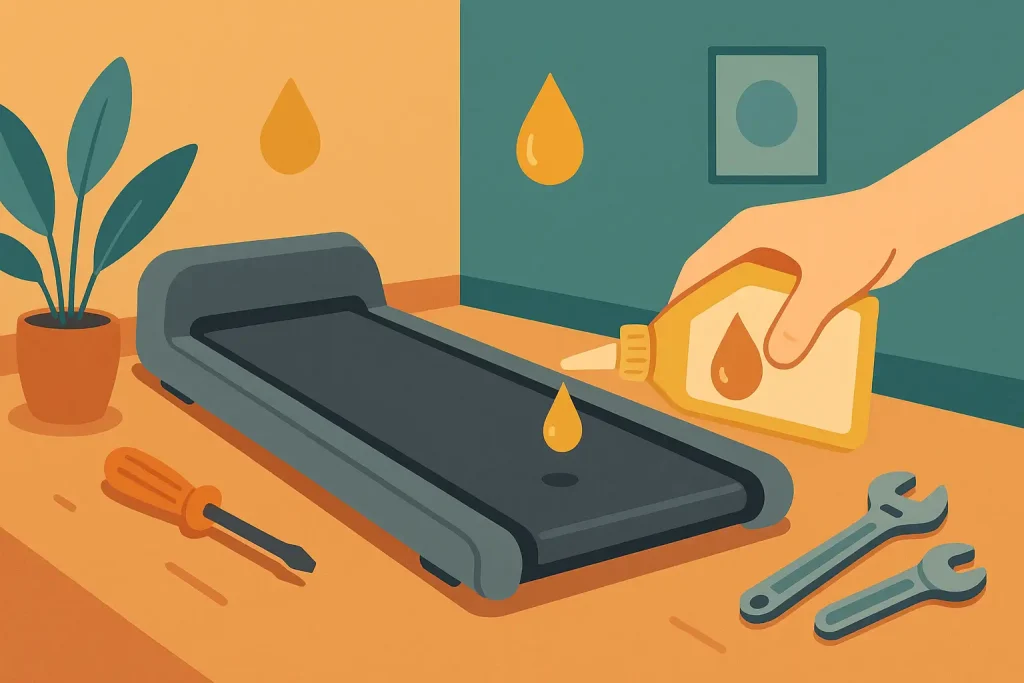
Apply the lubricant to the deck. Squeeze a thin line of silicone lubricant along the center of the deck, from the front roller to the back. You don’t need much—a little goes a long way. Too much lubricant can make the belt slippery and dangerous.
Lower the belt and distribute the lubricant. Once you’ve applied the silicone, carefully lower the belt back into place. Walk on the pad at a slow speed for 3-5 minutes. This distributes the lubricant evenly across the entire deck surface.
Wipe away excess lubricant. After your distribution walk, check for any excess lubricant that may have squeezed out from the sides. Wipe this away with a clean cloth to prevent slipping.
The entire process takes less than 15 minutes. That’s a small investment for extending your equipment’s life by years.
Signs Your Walking Pad Needs Immediate Lubrication
Sometimes your walking pad will tell you it needs attention before you reach your scheduled maintenance date.
Does your walking pad squeak or make grinding noises during use? That’s friction talking. The belt is struggling to move smoothly over the deck. This isn’t just annoying—it’s wearing down your equipment with every step.
Have you noticed the belt slowing down or hesitating even when you haven’t changed the speed setting? This indicates increased resistance from inadequate lubrication. The motor can’t maintain consistent speed because it’s fighting against friction.
Does it feel like you’re working harder to maintain your normal pace? When the belt doesn’t glide smoothly, you’ll notice increased resistance. Your legs have to work harder to keep moving. This defeats the purpose of having a walking pad in the first place.
Is the motor getting unusually hot after relatively short sessions? Excessive heat indicates the motor is straining. Without proper lubrication, the motor works overtime just to maintain basic function.
These symptoms demand immediate attention. Don’t wait for your next scheduled maintenance date. Lubricate your walking pad as soon as possible to prevent permanent damage.
Common Lubrication Mistakes to Avoid
Even with the best intentions, people make mistakes when maintaining their walking pads.
Using too much lubricant ranks as the most common error. More isn’t better. Excess lubricant creates a slippery surface that’s dangerous to walk on. It can also attract more dust and dirt, which defeats the purpose of lubrication.
Forgetting to distribute the lubricant properly leaves you with uneven coverage. If you apply lubricant and don’t walk on the pad to spread it around, you’ve wasted your time. The lubricant needs to cover the entire deck surface to be effective.
Using the wrong product can cause irreversible damage. Stick with 100% silicone lubricant designed for fitness equipment. No substitutions.
Neglecting to clean first means you’re just sealing in dirt and debris. Always start with a clean surface. Otherwise, you’re creating an abrasive paste that accelerates wear instead of preventing it.
Ignoring the manufacturer’s instructions is surprisingly common. Your specific walking pad model may have unique requirements. Check your manual before performing maintenance.
Beyond Lubrication: Complete Walking Pad Maintenance
Oiling your walking pad is crucial, but it’s not the only maintenance task you should perform.
Regular cleaning prevents dirt buildup that can interfere with operation. Wipe down the belt after each use. Vacuum around and under the walking pad weekly. Keep the area clean to prevent debris from getting into the mechanism.
Belt tension checks ensure smooth operation. If the belt feels loose or starts slipping sideways, it needs adjustment. Most walking pads have simple tension adjustment mechanisms—consult your manual for specific instructions.
Inspection for wear should happen monthly. Look for cracks in the belt, frayed edges, or uneven wear patterns. Catching these issues early prevents bigger problems later.
Proper storage matters if you’re not using your walking pad daily. Keep it in a dry, temperature-controlled environment. Cover it to prevent dust accumulation. Don’t stack heavy items on top of it.
The Cost of Neglecting Maintenance
What happens if you ignore lubrication altogether?
In the short term, you’ll notice decreased performance. The walking pad becomes noisier. The belt feels sluggish. Your workouts become less enjoyable. These annoyances are just the beginning.
Within months, serious damage begins. The motor struggles under increased load. Heat buildup warps components. The belt material deteriorates rapidly. What could have been prevented with a €10 bottle of lubricant now requires hundreds of euros in repairs or replacement.
Some walking pad owners have reported complete motor failure after just six months of heavy use without lubrication. Others have seen their belts crack and tear prematurely. These aren’t manufacturing defects—they’re the predictable result of neglected maintenance.
The warranty won’t help you. Most manufacturers explicitly state that lack of proper maintenance voids warranty coverage. They’re not being difficult—they’re protecting themselves from claims that result from user negligence.
Making Maintenance a Habit
The best maintenance is consistent maintenance. Build it into your routine.
Set calendar reminders for your lubrication schedule. Treat it like any other important appointment. Keep your lubricant and cleaning supplies in an easily accessible location so there’s no excuse to skip maintenance.
Consider keeping a simple maintenance log. Note the date each time you lubricate your walking pad. Track any issues you notice. This record helps you identify patterns and adjust your maintenance schedule if needed.
Some walking pad models now include automatic lubrication systems or sensors that alert you when maintenance is due. If you’re shopping for a new walking pad, these features are worth considering—though they don’t eliminate the need for regular manual checks.
Your Walking Pad Deserves Care
Think of lubrication as an investment rather than a chore. Those few minutes every few months protect an equipment purchase that likely cost you several hundred euros. They ensure your walking pad remains safe to use. And they keep your fitness routine running smoothly without unexpected interruptions.
Your walking pad works hard for you. Return the favor by giving it the simple maintenance it needs to keep performing at its best.
If you’re ready to invest in quality fitness equipment that’s worth maintaining, browse our complete collection of walking pads to find the perfect model for your home or office in Cyprus.