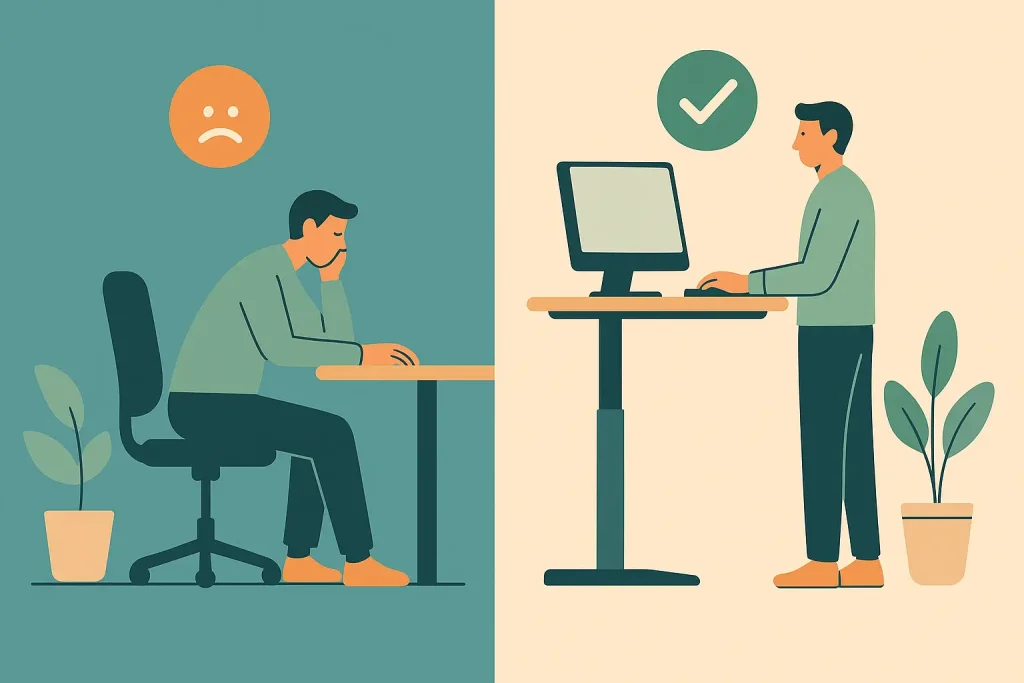
You’ve seen them everywhere. Offices. Home workspaces. Coffee shops.
Standing desks have become one of the most talked-about workplace interventions of the past decade. But are they actually good for you, or is this just another wellness fad that promises more than it delivers?
The answer isn’t as straightforward as you might think.
The Case for Standing Desks
Let’s start with why people love them. Standing desks burst onto the scene as a response to mounting concerns about sedentary lifestyles. “Sitting is the new smoking” became a rallying cry, and workers everywhere began seeking alternatives to their traditional desk setups.
The potential benefits are compelling:
- Reduced back and neck pain for many users
- Increased calorie burn throughout the day
- Improved posture and core engagement
- Better energy levels and focus
- Lower risk of weight gain and obesity
- Potential improvements in blood sugar levels
Many people report feeling more alert and productive when they alternate between sitting and standing. It makes sense. Your body wasn’t designed to remain in one position for eight hours straight.
What the Research Actually Shows
Here’s where things get interesting.
The scientific evidence on standing desks presents a more nuanced picture than marketing materials might suggest. Some studies have found modest benefits. Others show minimal impact. A few even raise concerns about potential downsides.
Blood sugar and metabolic health appear to benefit from standing more throughout the day. When you stand, your muscles engage differently than when you sit. This muscle activation can help regulate blood sugar levels, particularly after meals.
Calorie burn increases when standing, but don’t expect miracles. You’ll burn roughly 8-10 extra calories per hour standing versus sitting. That’s about 80 calories over a full workday. Not nothing, but not a game-changer either.
Back pain is where things get really complicated. Many users report significant relief from chronic lower back pain after switching to a standing desk. Others experience new discomfort in their legs, feet, or even their backs. The difference often comes down to usage patterns and proper setup.
The Hidden Downsides Nobody Talks About
Standing all day isn’t a magic solution. In fact, it can create its own problems.
Prolonged standing puts stress on your circulatory system. Blood pools in your legs. Your heart has to work harder to pump blood back up. This can lead to swollen ankles, varicose veins, and general fatigue.
Your joints take a beating too. Knees. Hips. Ankles. They all bear continuous load when you stand for extended periods.
Some research suggests that standing for long stretches might even increase cardiovascular risk for certain individuals. This seems counterintuitive, right? But the stress on your circulatory system isn’t trivial.
The real problem? Trading one static position for another static position doesn’t solve the fundamental issue.
The Movement Revolution
What your body craves isn’t standing or sitting. It’s movement.
Think about it this way: humans evolved as mobile creatures. We walked. We squatted. We climbed. We moved constantly throughout the day. Modern work life forces us into prolonged static positions, whether sitting or standing.
The solution isn’t choosing between sitting and standing. It’s incorporating both, plus regular movement breaks.
How to Actually Use a Standing Desk
If you’re going to use a standing desk, do it right. Most people get this wrong from day one.
Start slow. Really slow.
Begin with just 15-20 minutes of standing per hour. Your body needs time to adapt. Jumping straight into four-hour standing sessions is a recipe for discomfort and abandonment of your new desk within a week.
Proper ergonomics matter just as much when standing:
- Monitor at eye level, about arm’s length away
- Keyboard and mouse positioned so your elbows stay at 90 degrees
- Shoulders relaxed, not hunched up
- Core engaged without straining
- Weight distributed evenly on both feet
Invest in an anti-fatigue mat. These cushioned surfaces reduce stress on your joints and encourage subtle movements as you shift your weight.
Wear supportive shoes. Those fashionable flats or dress shoes? They’re not doing you any favors during extended standing periods.
The Sit-Stand Balance
The magic happens in the alternation.
Most experts recommend a ratio somewhere between 1:1 and 1:3 (standing to sitting). So if you stand for 20 minutes, sit for 20-60 minutes. Experiment to find what feels sustainable for you.
Listen to your body. Some days you’ll want to stand more. Other days, sitting will feel better. That’s normal. The goal isn’t rigid adherence to a formula.
Set timers if needed. It’s surprisingly easy to lose track and stand (or sit) for way longer than intended when you’re focused on work.
Take actual breaks too. Every hour or two, walk around. Stretch. Do a few squats. Your body will thank you.
Who Benefits Most?
Standing desks aren’t for everyone, and that’s okay.
They work particularly well for people who:
- Experience chronic lower back pain from prolonged sitting
- Tend to feel sluggish or unfocused at traditional desks
- Want to reduce overall sedentary time
- Have the flexibility to adjust their work position throughout the day
They might not be ideal if you:
- Have circulatory issues or varicose veins
- Experience chronic foot, knee, or hip pain
- Wear high heels or unsupportive footwear to work
- Need to focus on intricate tasks requiring stability
Pregnancy, recent surgeries, and certain medical conditions may also make prolonged standing inadvisable. Check with your healthcare provider if you’re unsure.
Beyond the Desk: The Bigger Picture
A standing desk can’t compensate for an otherwise sedentary lifestyle. You still need regular exercise. You still need to move throughout the day. You still need to take care of your overall health.
Think of a standing desk as one tool in your wellness toolkit. Not the entire toolbox.
The most important habit? Breaking up prolonged periods of any single position. Whether you have a standing desk or not, getting up and moving every 30-60 minutes makes a bigger difference than any single piece of furniture.
Making the Investment Decision
Standing desks range from $150 budget models to $1,500+ premium options. Is it worth it?
That depends on your specific situation and needs. If you work from home and spend significant time at your desk, a quality adjustable desk could be valuable. If your employer provides one, definitely try it. If you’re on a tight budget, there are interim solutions like desk converters or even improvised standing setups.
Consider these factors:
- How much time do you actually spend at your desk?
- Do you already experience discomfort from prolonged sitting?
- Will you realistically use the standing function regularly?
- What’s your budget for workspace improvements?
For many people, a standing desk becomes an expensive clothing rack after the novelty wears off. Be honest with yourself about whether you’ll stick with it.
The Verdict
So, are standing desks good for you?
Yes. And no. And maybe.
They can be beneficial when used correctly as part of a broader approach to movement and wellness. They’re not a cure-all. They won’t transform your health on their own. But for many people, they’re a useful tool for reducing sedentary time and managing discomfort from prolonged sitting.
The best approach? Alternate between sitting and standing throughout your day. Take regular movement breaks. Focus on overall activity levels rather than obsessing over any single intervention.
Your body will adapt to whatever you consistently do. Make that adaptation work in your favor by embracing variety and movement.
Ready to explore your options? Check out a range of quality standing desks that might fit your workspace and budget. Remember: the best desk is the one you’ll actually use consistently, combined with healthy movement habits throughout your day.