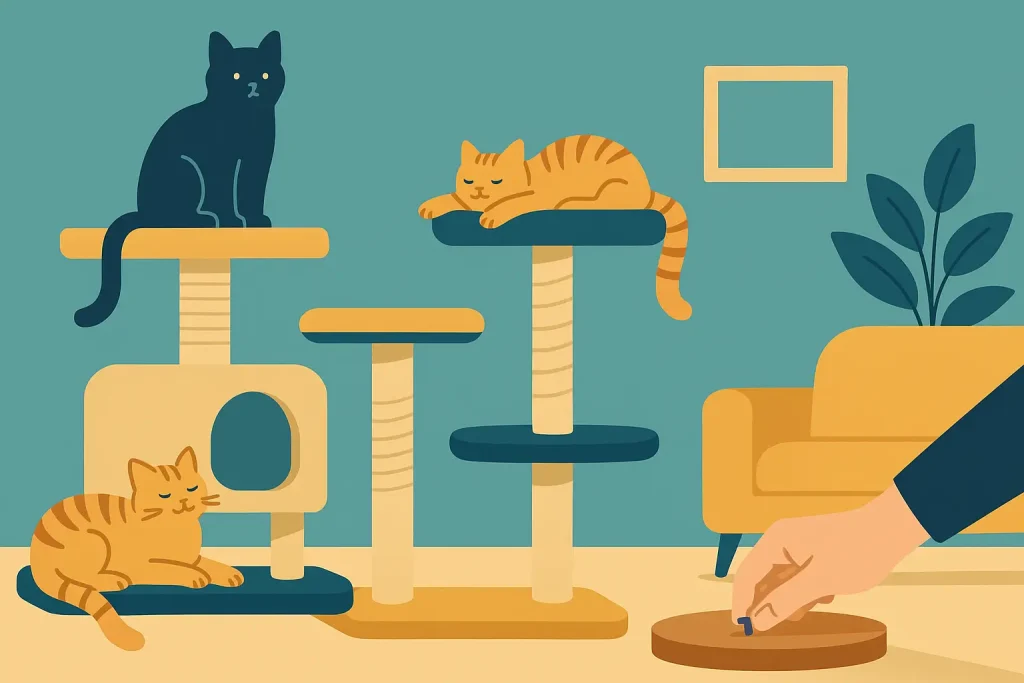
Your cat loves heights. That’s not up for debate. But when you’re shopping for a cat tree, one question probably keeps nagging at you: are cat trees actually safe?
The short answer? Yes, cat trees can be very safe. But there’s a catch. Not all cat trees are created equal, and even the sturdiest tower can become dangerous if you’re not paying attention to a few critical factors.
Let’s dig into what makes a cat tree safe (or not), what you should look for when buying one, and how to keep your feline friend secure while they’re living their best vertical life.
Why Cat Trees Matter for Your Cat’s Safety
Before we talk about the risks, it’s worth understanding why cat trees exist in the first place.
Cats are natural climbers. In the wild, they seek high vantage points to survey their territory and escape potential threats. Indoor cats have those same instincts, which is why you’ll often find yours perched on top of your refrigerator or bookshelf.
A cat tree gives your pet a designated climbing space. This actually reduces the risk of them scaling unsafe furniture or knocking over valuables. In that sense, a quality cat tree improves overall household safety.
But quality is the keyword here.
The Real Safety Concerns with Cat Trees
Let’s address the elephant in the room. Or rather, the wobbly tower in your living room.
Tipping and Stability Issues
This is the big one. A cat tree that tips over can injure your cat, damage your home, or both. Cats can weigh anywhere from 8 to 20 pounds, and when they launch themselves onto a platform, that impact force multiplies.
If the base isn’t wide enough or the tree isn’t properly secured, it’s going over.
Poor Construction and Materials
Cheap cat trees often use subpar materials. We’re talking about:
- Thin particle board that cracks under pressure
- Weak sisal rope that unravels and creates choking hazards
- Low-quality carpet that peels off and can be ingested
- Flimsy support posts that snap or bend
These issues don’t just affect longevity. They create real safety hazards.
Sharp Edges and Exposed Hardware
Some cat trees have exposed screws, staples, or sharp edges on platforms. Your cat can catch their paw, scratch themselves, or even get a claw stuck. It’s more common than you’d think, especially with budget models that skip quality control.
Height Without Proper Support
A six-foot tall cat tree sounds impressive. But if it’s top-heavy and not anchored, it’s a disaster waiting to happen. The higher the tree, the more critical proper engineering becomes.
What Makes a Cat Tree Actually Safe?
Now for the good news. Safe cat trees do exist, and they share some common characteristics.
A Wide, Heavy Base
The base should be substantial. Look for:
- Bases that are at least 20-24 inches wide for trees over 4 feet tall
- Heavy materials like solid wood or thick particle board
- Weighted bases that resist tipping
Some manufacturers add extra weight to the bottom specifically for stability. That’s a feature worth paying for.
Quality Construction
Run your hands over the tree. Feel any rough spots? See any exposed staples? Those are red flags.
Safe cat trees have:
- Smooth surfaces everywhere your cat will touch
- Recessed or covered hardware
- Tightly wrapped sisal rope with no loose ends
- Carpet or fabric that’s securely attached
Appropriate Size for Your Cat
A 5-pound kitten needs different support than a 15-pound Maine Coon. Weight capacity matters. Most cat trees list a maximum weight, but honestly? Go for something rated well above your cat’s actual weight. The safety margin is worth it.
Reinforced Platforms and Posts
Platforms should feel solid when you press on them. Posts should be thick (at least 3-4 inches in diameter) and shouldn’t flex when you push them. If you can easily bend a post with your hand, your cat will definitely bend it with their body weight.
Safety Tips When Setting Up Your Cat Tree
You’ve bought a quality tree. Great! But your job isn’t done.
Choose the Right Location
Place your cat tree:
- Away from ceiling fans (cats jump, remember?)
- Not near windows that open unless they’re always screened
- On level, stable flooring (carpet is actually better than hardwood for this)
- Away from curtains or blinds that cats might grab while jumping
Anchor It If Necessary
For tall trees or homes with multiple cats, consider anchoring. You can:
- Use furniture straps to secure the tree to a wall stud
- Place it in a corner for added stability
- Put furniture pads under the base to prevent sliding
It might seem like overkill. It’s not.
Check the Assembly
Follow the instructions exactly. Don’t skip steps or assume a screw is optional. Tighten everything properly, but don’t strip the screws by over-tightening. If something doesn’t fit right during assembly, stop and figure out why before proceeding.
Signs Your Cat Tree Has Become Unsafe
Even safe cat trees don’t last forever. Watch for these warning signs:
- Wobbling or swaying when your cat jumps on it
- Loose posts that rotate or feel unstable
- Frayed rope that’s coming apart
- Peeling carpet or fabric that’s creating loose pieces
- Cracked or broken platforms
- Your cat avoiding the tree (they often sense instability before we see it)
Any of these issues? Time for repairs or replacement.
Maintenance Keeps Your Cat Tree Safe
Regular upkeep prevents most safety issues.
Do this monthly:
- Tighten all screws and bolts
- Check for loose rope or fabric
- Inspect platforms for cracks
- Look for wear patterns that indicate structural stress
- Vacuum off fur and debris (which adds weight over time)
It takes ten minutes. Your cat’s safety is worth it.
Special Considerations for Multiple Cats
Got more than one cat? The safety equation changes.
Multiple cats mean:
- More weight on the structure simultaneously
- More vigorous play and jumping
- Faster wear and tear
- Potential for cats to chase each other and crash into the tree
Consider getting a tree specifically rated for multiple cats, or choose a lower, more stable design. Two separate smaller trees might actually be safer than one tall tower.
What About Kittens and Senior Cats?
Kittens are reckless. They’ll jump from heights they shouldn’t and misjudge distances. For young cats, lower platforms and lots of intermediate steps reduce fall risks. They don’t need a six-foot tower yet.
Senior cats face different challenges. Arthritis and reduced mobility make high jumps difficult. They need:
- Lower entry points
- Gentle ramps or closely spaced platforms
- Sturdy handholds
- Non-slip surfaces
A safe cat tree for a 12-year-old cat looks very different from one for a 1-year-old.
The Bottom Line on Cat Tree Safety
Are cat trees safe? Yes, when you choose wisely and maintain them properly.
The key is being an informed buyer. Don’t just grab the cheapest option on sale. Look at construction quality, read reviews that specifically mention stability, and consider your individual cat’s needs.
Once you’ve got a quality tree, your responsibilities continue. Regular maintenance, proper placement, and paying attention to your cat’s behavior around the tree all contribute to long-term safety.
Your cat deserves a safe place to climb, scratch, and survey their kingdom. A well-chosen cat tree provides exactly that. Just remember: the safest cat tree is one that’s built well, set up correctly, and checked regularly.
When you’re ready to shop, take your time comparing options. Look at our variety of cat trees to find one that meets all the safety criteria we’ve discussed. Your cat’s vertical adventures should be fun, not dangerous, and the right tree makes all the difference.