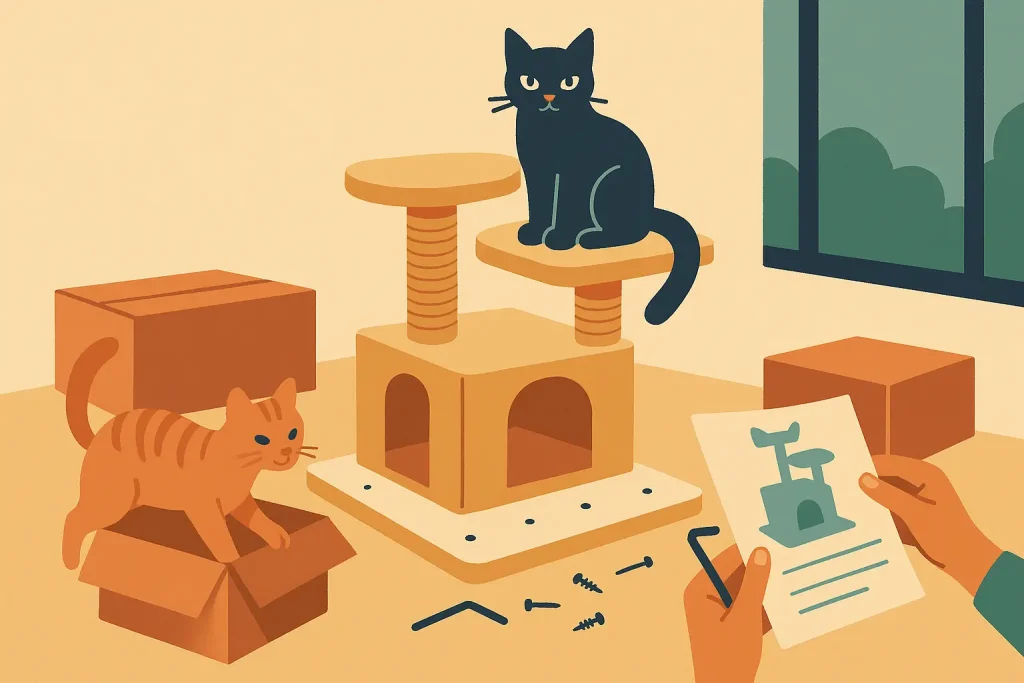
You’ve finally decided to buy a cat tree. You’ve picked the perfect one, added it to your cart, and clicked purchase. Now comes the question that determines whether you’ll be enjoying a relaxing evening or spending three hours with an Allen wrench: do cat trees come assembled?
The short answer: most cat trees do not come fully assembled. But the assembly process varies wildly depending on the brand, size, and complexity of the tree you’ve chosen.
Let’s break down exactly what you can expect.
The Standard Shipping Reality
Here’s what typically happens.
Your cat tree arrives in a flat box (or multiple boxes if it’s a large model). Inside, you’ll find various pieces: platforms, posts, a base, maybe some dangling toys, and that inevitable bag of hardware that looks more complicated than it actually is.
Most manufacturers ship cat trees unassembled for several practical reasons. Shipping costs skyrocket when you’re moving bulky, assembled furniture. Pre-assembled trees take up significantly more space in warehouses. And honestly, many wouldn’t survive shipping intact if they arrived fully built.
The assembly is left to you.
What “Some Assembly Required” Really Means
That phrase covers a wide spectrum.
On one end, you have simple cat trees with maybe five pieces that snap together in ten minutes. On the other end? Complex multi-level structures with 30+ components, multiple platforms, condos, ramps, and enough hardware to stock a small toolbox.
The assembly difficulty typically correlates with:
- Size – Taller trees have more components
- Features – Each hammock, condo, or ramp adds complexity
- Brand – Some prioritize easy assembly, others don’t
- Price point – Budget models sometimes have confusing instructions
Don’t assume expensive means easy. Some premium cat trees have intricate designs that require patience and attention to detail.
Time Investment: What You’re Really Looking At
How long will assembly take?
For a basic cat tree (3-4 feet tall, simple design):
- 15-30 minutes for most adults
For a medium-sized tree (4-6 feet, multiple platforms):
- 30-60 minutes with clear instructions
For a large, complex cat tree (6+ feet, multiple features):
- 1-3 hours depending on experience and design
These estimates assume you’re working alone. Having a second person helps, especially when attaching top platforms or stabilizing tall structures during assembly.
The Tools You’ll Actually Need
Good news: you probably won’t need a full workshop.
Most cat trees require minimal tools. Typically, you’ll need:
- Allen wrench (usually included)
- Screwdriver (Phillips head most common)
- Your hands
- Patience
Some manufacturers include all necessary tools in the box. Others assume you own basic household tools. Check the product description before purchasing to avoid frustrating surprises.
Occasionally, you might benefit from having:
- Rubber mallet (for tight-fitting posts)
- Power drill with appropriate bits (speeds up the process)
- Level (ensures stability on uneven floors)
But these are bonuses, not requirements.
Reading the Instructions: Skip at Your Own Risk
Think you can wing it? You probably can’t.
Cat tree assembly isn’t intuitive. Posts might look identical but have different threading. Platforms might only attach one way. That mysterious metal bracket? It’s probably crucial for stability.
The instruction quality varies dramatically between brands. Some provide clear, illustrated step-by-step guides. Others offer poorly translated text with confusing diagrams that seem designed to test your spatial reasoning skills.
Pro tip: lay out all pieces before starting. Identify each component according to the instructions. This prevents the frustration of realizing halfway through that you’ve attached the wrong platform.
Common Assembly Challenges
Even with instructions, certain steps trip people up.
Threading posts through platforms causes problems when holes don’t align perfectly. Sometimes you need to apply pressure while twisting. Other times, posts are legitimately defective or poorly manufactured.
Attaching the base securely determines whether your cat tree becomes a wobbly disaster. If the base isn’t tightened properly, the entire structure remains unstable no matter what else you do correctly.
Installing sisal rope sections can be tricky. Some come pre-wrapped, others require you to wrap them yourself. If you’re wrapping, expect to add 20-30 minutes to assembly time.
Aligning multiple platforms on tall trees tests your patience. You’re essentially building vertically while ensuring everything stays level. Having someone hold pieces in place while you secure them makes this significantly easier.
Do Any Cat Trees Come Pre-Assembled?
Yes, but they’re rare.
Some smaller cat trees, particularly compact models designed for kittens or single-cat households, occasionally ship fully assembled. These are usually:
- Simple posts with one or two platforms
- Compact scratching posts with attached toys
- Wall-mounted options (though mounting hardware still requires installation)
Premium brands occasionally offer “white glove delivery” services where professionals assemble the tree in your home. This service costs extra, sometimes substantially so, but eliminates the hassle entirely.
Expect to pay premium prices for pre-assembled options. The convenience comes at a cost.
The Quality vs. Assembly Difficulty Relationship
Here’s an interesting pattern.
Budget cat trees often have simpler assembly processes but lower build quality. Everything might snap together easily because the materials are lightweight and the design is basic. However, these trees may wobble, wear out quickly, or fail to support larger cats.
Higher-quality cat trees frequently have more complex assembly because they use better materials and more sophisticated designs. Solid wood posts, reinforced platforms, and stable bases require proper installation. The assembly difficulty often reflects superior construction.
Don’t let a challenging assembly process discourage you from a quality product. That extra hour of work might mean years of reliable use.
Making Assembly Easier: Practical Tips
Want to minimize frustration? Follow these strategies.
Clear a large workspace. You’ll need floor space to lay out components and room to maneuver as the tree grows taller. Assembling a six-foot cat tree in a cramped corner is unnecessarily difficult.
Read all instructions first. Don’t start screwing things together while simultaneously reading step one. Understanding the entire process beforehand prevents mistakes that require disassembly.
Don’t fully tighten screws initially. Loosely attach components, make sure everything aligns correctly, then go back and tighten everything. This approach allows for adjustments without damaging threads or materials.
Check stability at each step. After attaching each new section, give the tree a gentle shake. If something feels loose, address it immediately rather than discovering stability issues after complete assembly.
Have your phone handy. Many brands offer video assembly tutorials on their websites or YouTube channels. Visual guidance often clarifies confusing written instructions.
When Assembly Goes Wrong
What if things don’t fit properly?
Missing hardware happens more often than it should. Reputable companies will ship replacement parts, but this delays your project. Some people solve this by having a basic hardware assortment at home.
Defective pieces occasionally slip through quality control. Stripped screw holes, cracked platforms, or posts that won’t thread properly require contacting customer service for replacements.
Unclear instructions frustrate everyone. If you’re genuinely confused, check online. Other customers have probably encountered the same issue and posted solutions in reviews or forums.
Stability problems after assembly usually indicate that something wasn’t tightened properly or the tree is positioned on an uneven surface. Before contacting customer service, go through and re-tighten all connections. Add felt pads under the base if your floor has slight irregularities.
The Assembly Experience by Cat Tree Type
Different styles present different challenges.
Simple posts with platforms are the easiest. Thread the post through the base, add platforms, tighten everything. Fifteen minutes, done.
Multi-level condos increase complexity. You’re essentially building a small wooden structure with carpeted surfaces. Expect 45-90 minutes depending on the number of levels and features.
Trees with ramps and hammocks add moving parts and flexible components. These require more precise alignment and often more hardware. Budget an extra 15-30 minutes beyond a comparable tree without these features.
Wall-mounted trees eliminate base assembly but require proper wall mounting. You’ll need to locate studs, drill pilot holes, and ensure secure mounting. This isn’t harder, just different, and mistakes can damage your walls.
Modular/expandable trees designed to grow with your needs often have the most intuitive assembly systems. They’re engineered for reconfiguration, which usually means simpler connection mechanisms.
Is Professional Assembly Worth It?
Some retailers offer assembly services.
TaskRabbit and similar platforms connect you with local handypeople who’ll assemble your cat tree for a fee. Costs typically range from $50-150 depending on tree complexity and your location.
Is it worth it? That depends on:
- Your comfort level with assembly projects
- How much you value your time
- Whether you have physical limitations
- The complexity of your chosen cat tree
For someone who finds furniture assembly genuinely stressful, paying for professional assembly makes perfect sense. For others, the satisfaction of building it themselves (and saving money) outweighs the time investment.
What to Do With the Boxes and Packaging
Your cat will have opinions about this.
Once assembly is complete, you’ll have boxes, plastic wrap, and packing materials. Before recycling everything, let your cat explore the boxes. Many cats find the packaging more interesting than the actual cat tree, at least initially.
This isn’t a waste. It’s an opportunity to let your cat investigate new smells and textures at their own pace. They’ll transition to the actual tree once the novelty of the boxes wears off.
Keep the hardware bag even after assembly. Extra screws and bolts prove useful if you need to tighten things later or if pieces go missing during moves.
The Bottom Line
Do cat trees come assembled? Almost never completely.
But assembly doesn’t have to be a nightmare. With reasonable expectations, basic tools, and a bit of patience, most people can successfully assemble a cat tree in under an hour. The process is straightforward, even if it’s not always quick.
Choose quality construction over easy assembly. A well-built cat tree that takes 90 minutes to assemble will serve your cat better than a flimsy one that snaps together in ten minutes.
Your cat doesn’t care how long assembly took. They only care about having a stable, comfortable place to climb, scratch, and survey their territory.
Ready to find a cat tree that’s worth the assembly effort? Explore our full range of cat trees and climbing furniture to discover the perfect option for your feline friend.