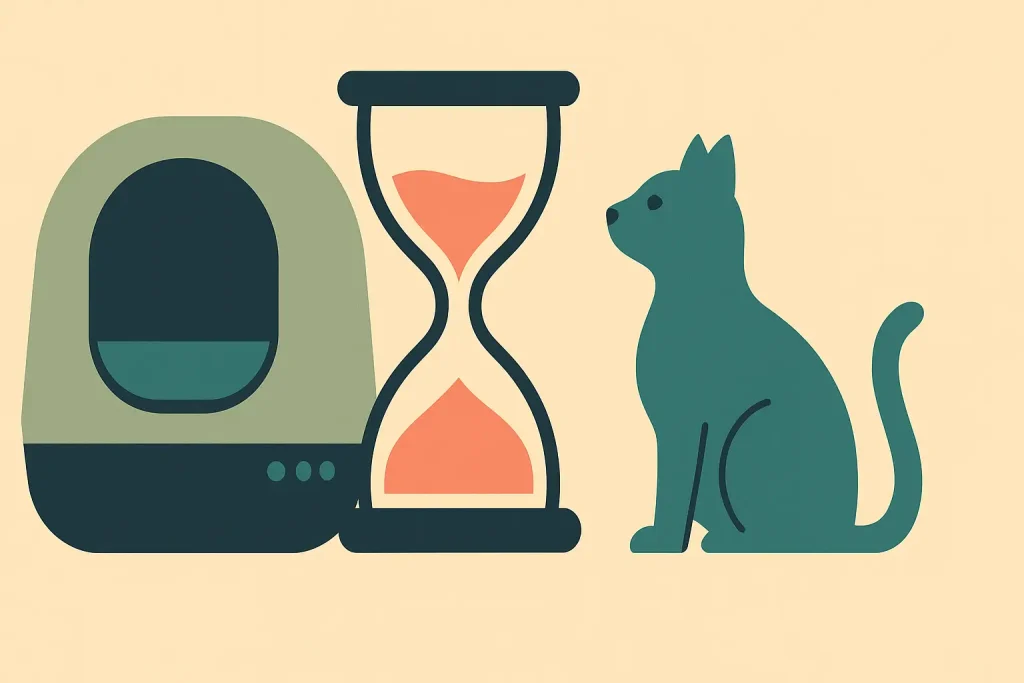
You’re about to spend €200-€600 on an automatic litter box. Fair question: how long until you’re shopping for another one?
The realistic lifespan of automatic cat litter boxes ranges from 2-7 years, depending on build quality, maintenance habits, usage intensity, and a bit of luck with component reliability.
That’s a wide range. Let’s break down exactly what determines where your box falls on that spectrum.
The Build Quality Factor
Not all automatic litter boxes are created equal. Some use robust motors, metal gears, and durable plastics designed for years of daily operation. Others cut costs with cheaper components that begin degrading within months.
Budget models (€150-€250) typically last 2-3 years with proper care. Mid-range options (€250-€400) often reach 4-5 years. Premium systems (€400+) can exceed 6-7 years if well-maintained.
Why the difference? Materials matter enormously.
Cheap plastic gears wear down from constant rotation. Low-quality motors strain under the load of moving heavy litter. Flimsy sensors fail from dust exposure or humidity. Basic rake tines bend or snap after enough cycles.
Premium models invest in components built for longevity—sealed motors that resist dust infiltration, metal components in high-stress areas, and industrial-grade sensors that tolerate environmental challenges.
You generally get what you pay for in terms of durability. The cheapest option rarely proves economical over five years.
Usage Intensity: The Hidden Lifespan Killer
One cat versus four cats dramatically affects longevity. It’s not just about proportional use—it’s exponential wear.
A single-cat household might see 3-4 cleaning cycles daily. The box runs perhaps 1,000-1,500 cycles per year. Components experience moderate stress.
Four cats? You’re looking at 12-20 cycles daily. That’s 4,000-7,000+ cycles annually. Motors work harder. Gears grind more. Sensors activate constantly. Rake assemblies move heavier loads.
Every automatic box has a cycle limit—an approximate number of operations before mechanical failure becomes likely. Budget models might handle 3,000-5,000 cycles before problems emerge. Quality units can reach 15,000-25,000+ cycles.
Do the math for your household. If you’ve got multiple cats, budget accordingly for earlier replacement or invest initially in higher-capacity systems designed for heavy use.
Maintenance: The Single Biggest Longevity Factor
Here’s the truth most people don’t want to hear: neglected automatic boxes rarely survive three years, regardless of quality.
Proper maintenance can double or triple your box’s lifespan. Poor maintenance kills even premium models prematurely.
Critical maintenance tasks:
Weekly wipe-downs prevent residue buildup that gums up moving parts. Dried urine and litter dust create friction that strains motors and wears gears faster.
Monthly deep cleaning removes accumulated debris from crevices, sensors, and internal mechanisms. This debris causes sensors to malfunction and mechanics to jam.
Regular litter replacement prevents clumping clay from cementing inside the drum or around rake teeth. Hardened litter creates resistance that overworks motors.
Filter replacements ensure airflow through ventilation systems and prevent dust from infiltrating sealed components.
Lubrication of moving parts (where manufacturer-recommended) reduces friction and wear on joints and gears.
Skip these tasks? Expect failure within 2-3 years. Maintain religiously? Six years becomes achievable even with mid-range models.
Common Failure Points
Understanding what typically breaks first helps you prevent premature failure—or at least recognize when replacement is necessary versus repairable.
Motors burn out. This is the most common terminal failure. Motors work hard moving heavy litter loads repeatedly. Dust infiltration, overheating from blocked vents, or simply accumulated wear causes them to fail. When the motor dies, replacement often costs almost as much as a new unit.
Sensors stop working. Weight sensors, infrared cat detection, and waste level monitors all degrade over time. Dust coating, humidity damage, or electronic component failure renders them unreliable. Some sensors are replaceable; others are integrated into the main board.
Rake or drum mechanisms break. Plastic tines snap. Gears strip. Rotating drums crack. These mechanical failures often result from buildup causing excessive resistance, but sometimes they’re just material fatigue from thousands of cycles.
Electronics fail. Circuit boards hate moisture and dust—two things abundant near litter boxes. Humidity from urine evaporation can corrode connections. Power surges (common in some areas) can damage control boards.
Structural plastic cracks. The housing itself can develop stress fractures, especially where components attach or where weight concentrates. Sun exposure near windows accelerates plastic degradation.
The Cyprus Climate Challenge
Living in Cyprus adds specific stressors to automatic litter box longevity. Heat, dust, and humidity all accelerate component degradation.
Summer temperatures can make plastic components more brittle over time. Repeated heating and cooling cycles create material stress. Electronics inside the unit can overheat if placed in un-air-conditioned spaces.
Dust is everywhere in Cyprus, particularly during dry summer months. Dust infiltrates even sealed components eventually, coating sensors and creating friction in moving parts. More frequent cleaning becomes essential—not just for odor control, but for mechanical survival.
Coastal humidity affects electronic components, causing corrosion faster than in drier climates. Inland areas might have dust problems; coastal homes battle both.
Power fluctuations in some Cyprus areas can damage sensitive electronics. Consider a surge protector for your automatic box—it’s cheap insurance.
Realistically, expect Cyprus conditions to reduce lifespan by 10-20% compared to ideal indoor environments unless you’re very diligent about maintenance and climate control.
Signs Your Box Is Approaching End of Life
Knowing when to replace rather than repair saves frustration and money.
Increasing error frequency. One error monthly is normal. Weekly errors suggest deteriorating components. Daily errors mean something’s failing.
Motor sounds changing. Grinding, squealing, or laboring sounds indicate wear. Motors running noticeably louder than when new signal imminent failure.
Cleaning cycles becoming incomplete. If the box frequently stops mid-cycle or leaves waste behind, mechanical components are wearing out.
Sensor malfunctions multiplying. Cat detection failing, waste drawer “full” alerts when it’s empty, or weight sensing errors all point to degrading electronics.
Visible structural damage. Cracks in plastic housing, broken latches, warped components—these indicate the unit has reached its physical limits.
Repair costs approaching 50% of replacement cost. At this point, investing in a new unit makes more financial sense.
The Real Cost Per Year
Let’s talk actual value. A €300 automatic box lasting 4 years costs €75 annually. A €500 box lasting 7 years? About €71 annually. A €200 box lasting 2 years? €100 per year.
Longevity dramatically affects cost-effectiveness. The slightly more expensive but longer-lasting option often proves cheaper over time.
Factor in potential repair costs too. Budget models frequently need parts replaced—new rakes, sensors, motors. These repairs add up quickly.
Premium models might never need repairs beyond routine maintenance, or offer better warranty coverage that includes component replacement.
Warranty Coverage: What to Expect
Most automatic litter boxes come with 1-year warranties. Some premium models offer 2-3 years. This gives you insight into manufacturer confidence in longevity.
A company offering a 3-year warranty believes their product will last significantly longer—otherwise warranty claims would bankrupt them. A 90-day warranty suggests the manufacturer knows problems arise quickly.
Read warranty terms carefully:
- Does it cover motors and electronics, or just structural defects?
- Who pays return shipping for warranty claims?
- Are wear-and-tear items excluded?
- Does it cover your region (important for Cyprus purchases)?
Extended warranties sometimes offer value for automatic litter boxes, particularly if you’ve got multiple cats generating heavy use. Calculate whether the warranty cost makes sense against replacement risk.
Extending Your Box’s Lifespan: Practical Tips
Use appropriate litter exclusively. Wrong litter creates problems that accelerate wear. Clumping clay with low dust remains the safest choice for longevity.
Never overfill the litter box. Excess litter overworks the motor and strains mechanical components. Follow manufacturer fill guidelines precisely.
Clean immediately after error messages. Error codes indicate something went wrong. Clearing the issue promptly prevents secondary damage from the mechanism straining against obstacles.
Keep the unit out of direct sunlight. UV exposure degrades plastic components faster. In Cyprus, this means considering placement carefully near windows.
Use a surge protector. Power spikes kill electronics. Simple surge protection extends electronic component life significantly.
Address issues promptly. Strange noises, irregular movements, or sensor glitches indicate developing problems. Fixing small issues prevents cascading failures.
Replace litter completely monthly. Accumulated contamination throughout the litter creates resistance and strain. Fresh monthly changes reduce mechanical stress.
Keep pets from playing with or jumping on the unit. Physical impacts damage components. If your cat treats it as a launchpad, place it strategically to discourage this.
When Repair Makes Sense
Simple repairs worth attempting:
- Replacing broken rake tines or cleaning combs
- Installing new waste drawer liners or carbon filters
- Cleaning sensor lenses or contacts
- Resetting jammed mechanisms
Repairs probably not worth it:
- Motor replacement (often 40-60% of unit cost)
- Control board replacement (expensive, requires technical skill)
- Cracked housing or drum (structural integrity compromised)
- Multiple simultaneous failures (indicates general decline)
If repair quotes exceed half the replacement cost, buy new. You’re paying heavily for a used system with other components also nearing failure.
Multiple Cat Households: Special Considerations
Running one automatic box with three cats? Expect half the lifespan compared to single-cat use. The intensive operation creates wear that even perfect maintenance can’t completely prevent.
Consider your options:
- Invest in commercial-grade systems designed for multi-cat households
- Purchase two mid-range boxes instead of one premium unit
- Plan for more frequent replacement (every 2-3 years)
- Maintain even more diligently to compensate for heavy use
The Replacement Decision
Eventually, every automatic litter box reaches the end. Don’t hang onto a dying unit too long.
A malfunctioning box creates stress—for you and your cats. Unreliable cleaning means manual backup becomes necessary, defeating automation’s purpose. Cats might start avoiding a box that’s noisy, slow, or leaves waste.
Budget for replacement proactively. If your box is 5 years old, start saving. Even well-maintained units rarely exceed 7 years. Having funds ready prevents rushed decisions or temporary reversion to manual scooping.
The Bottom Line
Automatic cat litter boxes typically last 3-5 years with average care and single-cat use. Premium models with excellent maintenance can reach 6-7 years. Budget options or multi-cat households might see 2-3 years.
Cyprus’s climate challenges demand extra diligence—more frequent cleaning, climate control considerations, and dust management all become critical for maximizing longevity.
The key factors you control:
- Initial quality selection
- Maintenance consistency
- Appropriate litter choice
- Climate protection
- Prompt issue resolution
The factors you don’t: usage intensity from multiple cats, manufacturing quality variations, and component lottery (sometimes you just get unlucky).
Budget €75-€150 annually for this convenience—either as a yearly maintenance/repair fund or as amortized replacement cost. That’s the real price of automation.
Worth it? For most cat owners, absolutely. The daily time savings and consistent cleaning far outweigh the eventual replacement need.
Ready to invest in a quality automatic solution built to last? Browse our complete automatic cat litter boxes collection to find durable, reliable options designed for years of dependable service.